About the project
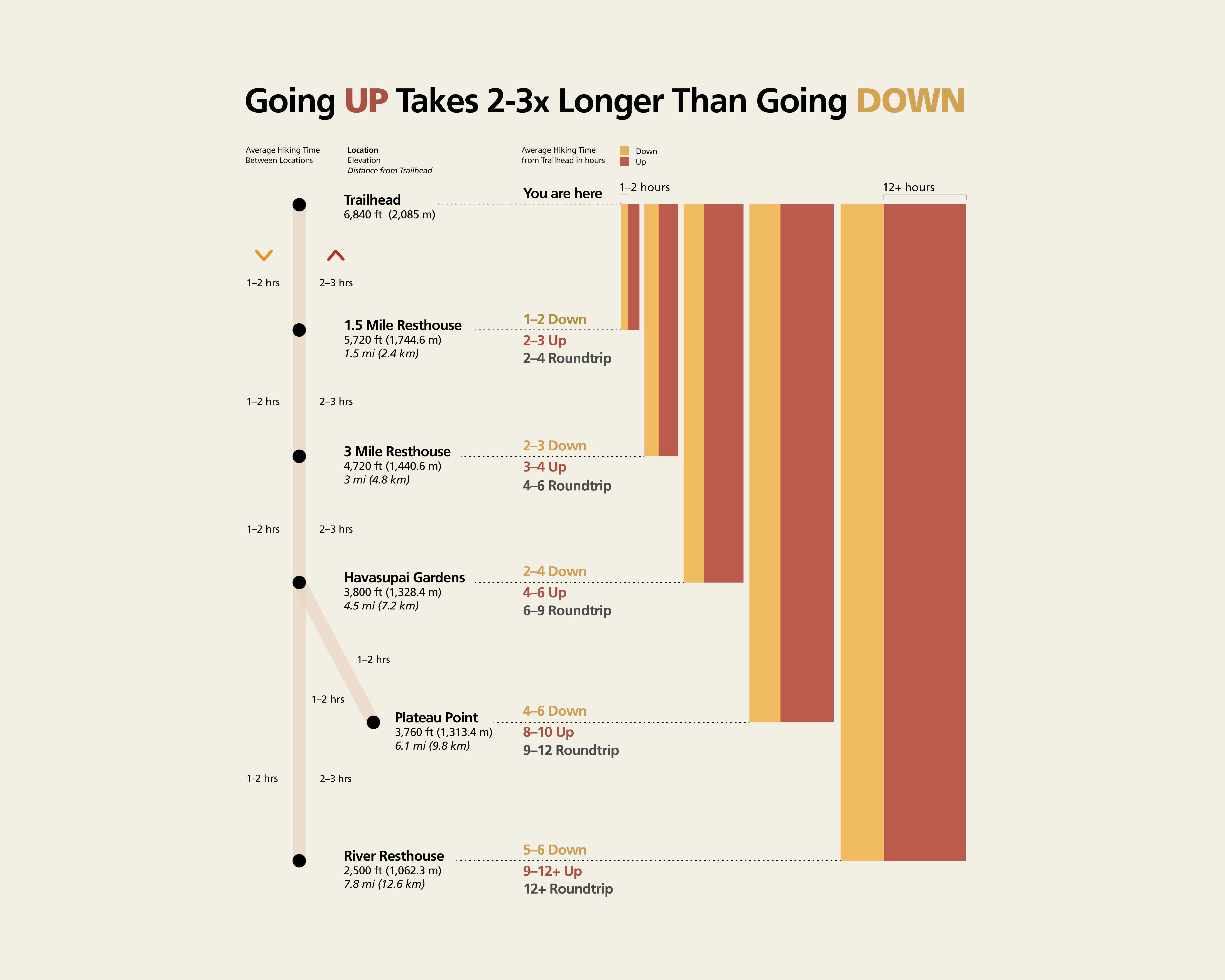
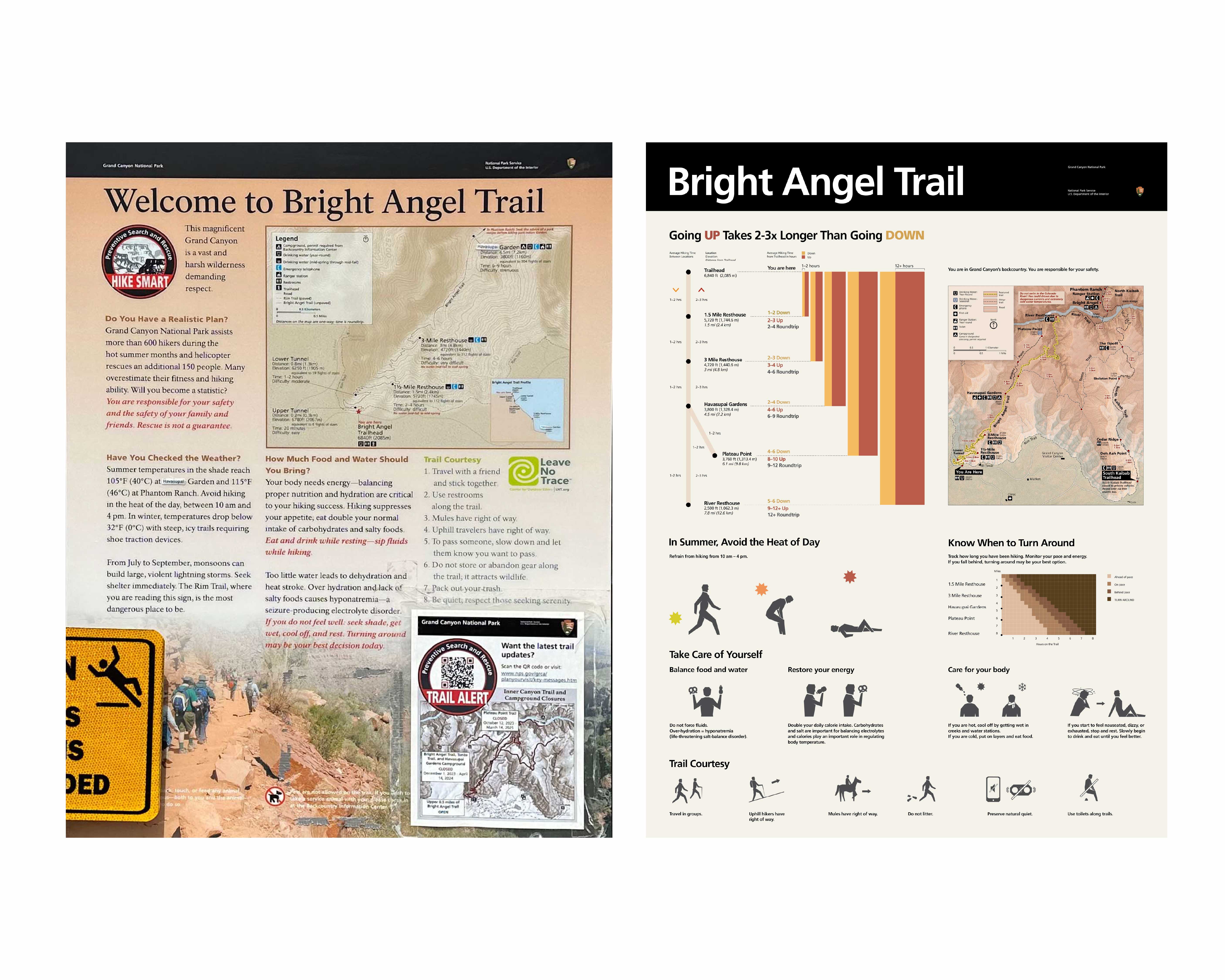
At Grand Canyon National Park, search and rescue teams were responding to a recurring and preventable problem: hikers consistently underestimated the climb out. Many understood the distance down, but not that returning up the trail takes nearly twice as long, leading to exhaustion, dehydration, and dangerous rescues.
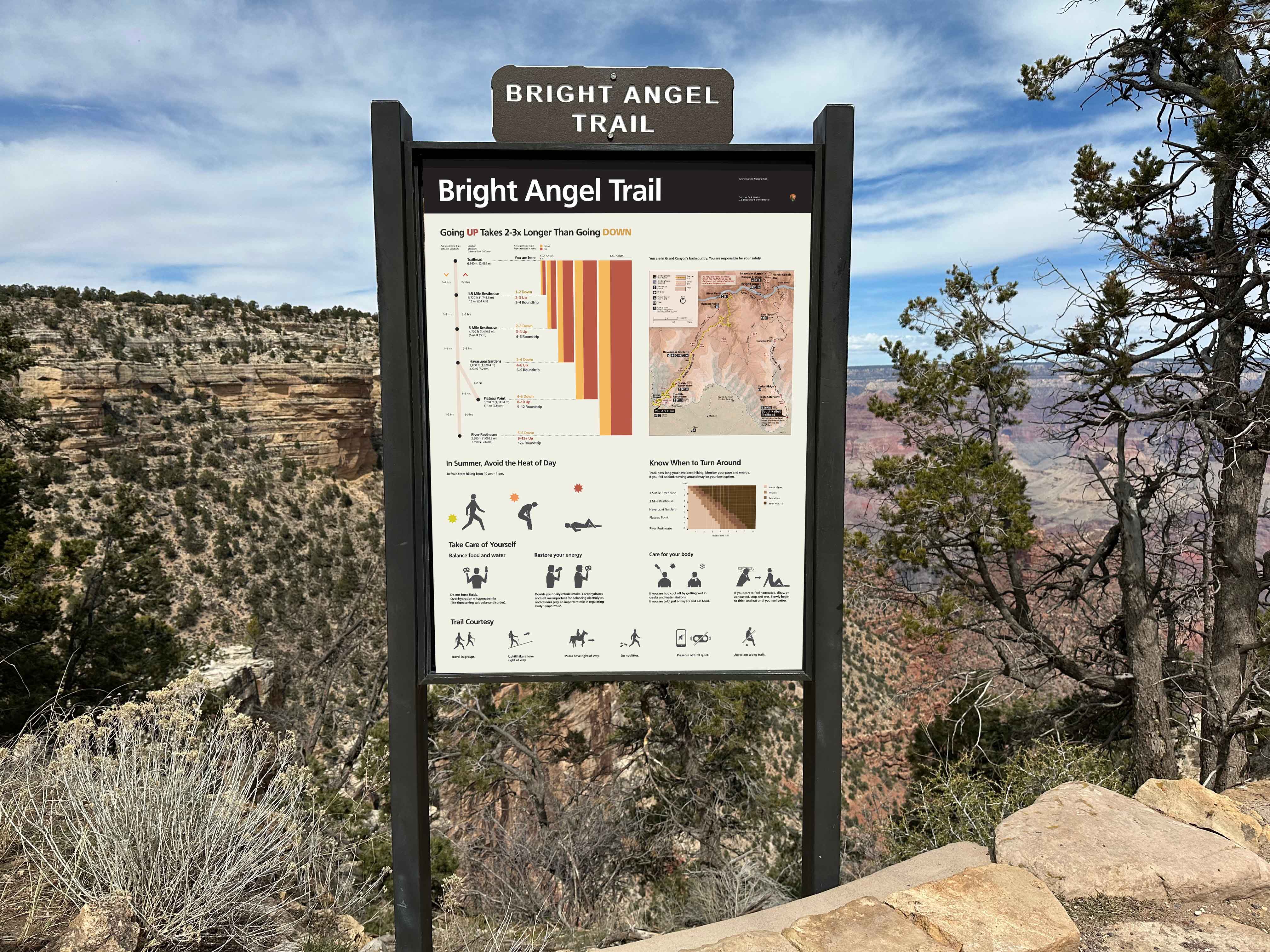
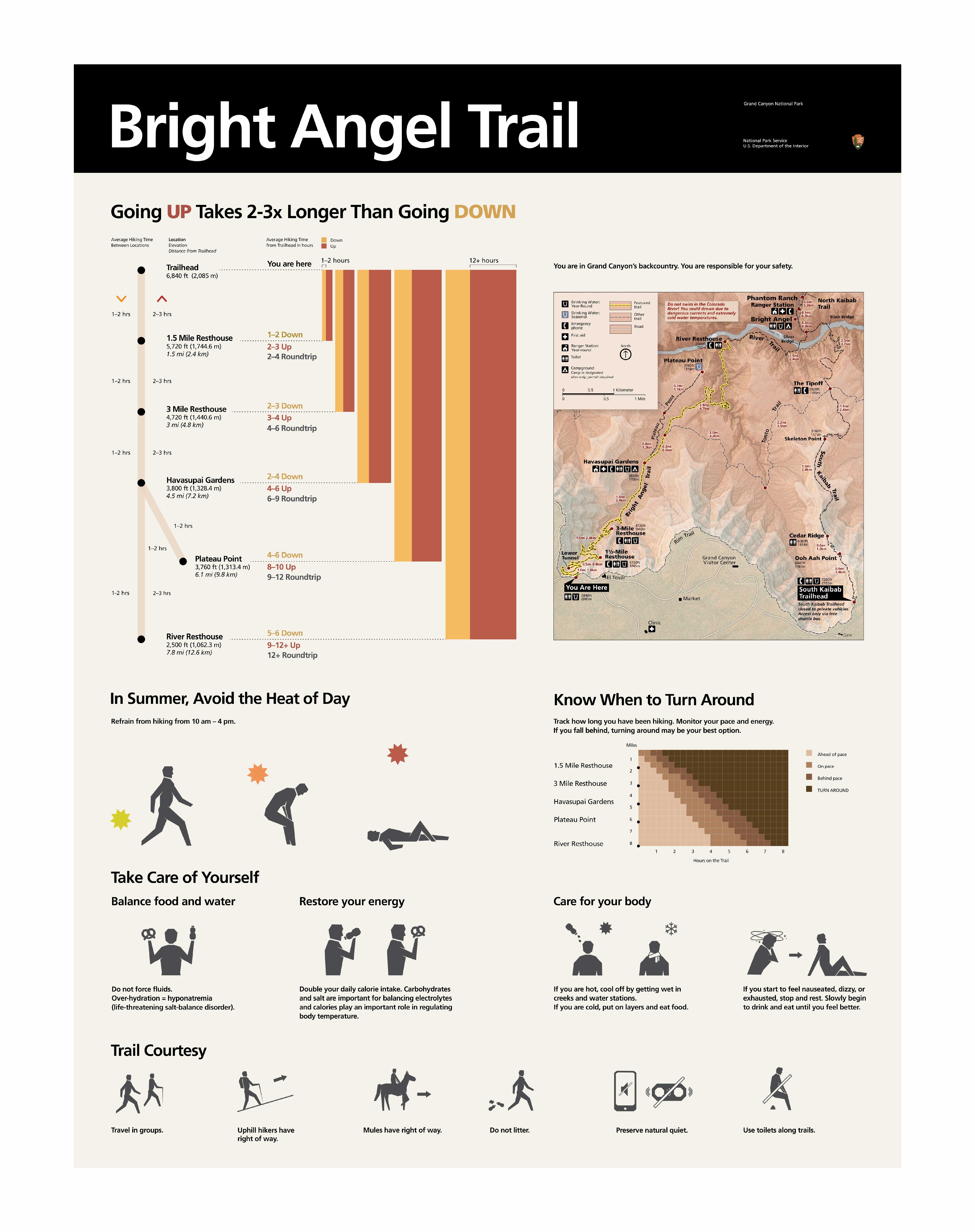
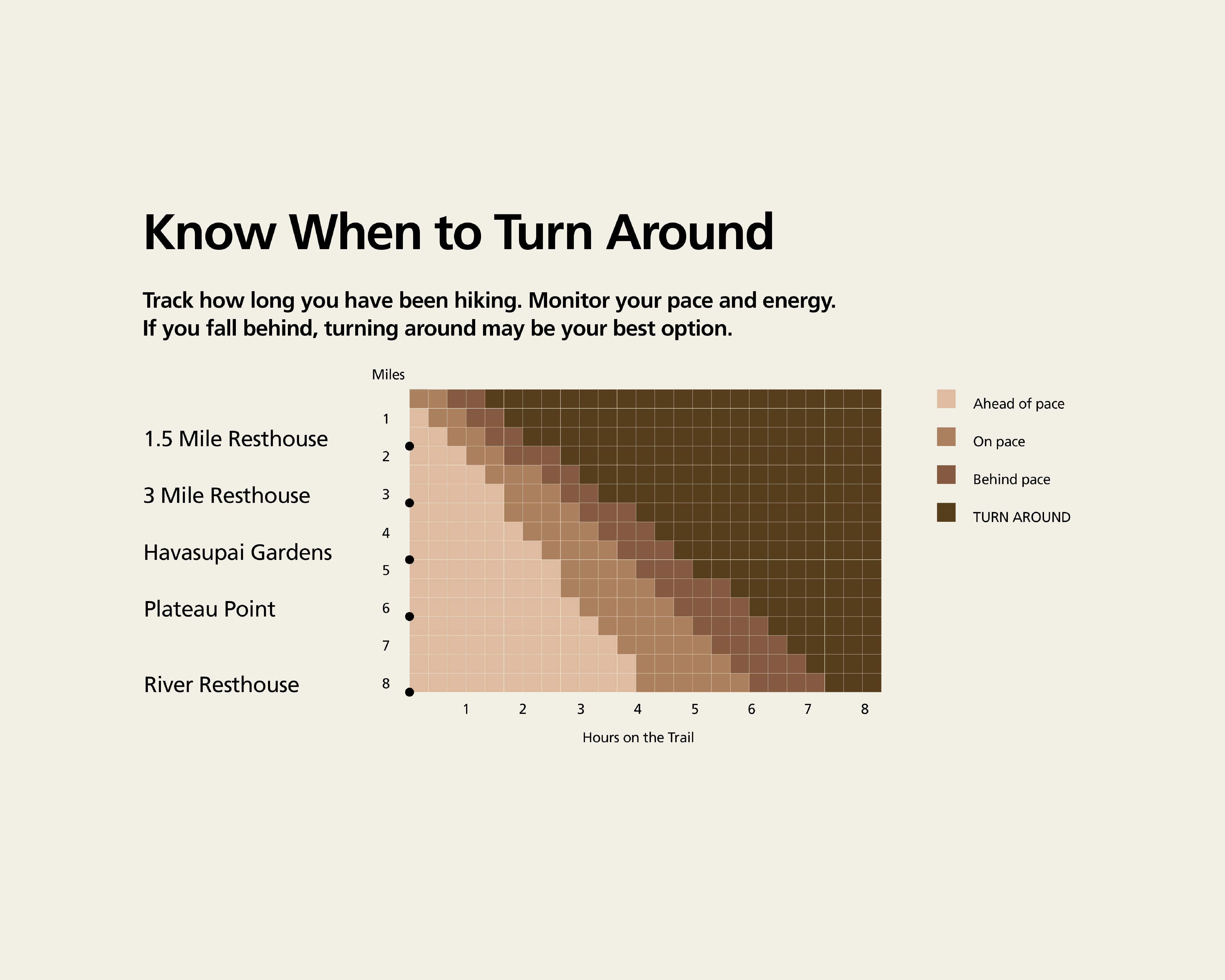
This project reimagines one of the park’s busiest trailheads as a tool for decision-making, not decoration. Working within National Park Service typographic and editorial standards, the design prioritizes comprehension through visual systems rather than dense text. Elevation gain, time estimates, and key warnings are communicated graphically, allowing visitors of any language or experience level to grasp the reality of the trail at a glance.
By emphasizing verticality, distance, and ascent, the signage reframes the hike as a full journey, both down and back up. The result is a safety-driven wayfinding system that respects NPS tradition while reducing confusion, empowering hikers to make informed choices before they step onto the trail.
InDesign, Illustrator, Photoshop
Information Design
At Grand Canyon National Park, search and rescue teams were responding to a recurring and preventable problem: hikers consistently underestimated the climb out. Many understood the distance down, but not that returning up the trail takes nearly twice as long, leading to exhaustion, dehydration, and dangerous rescues.
This project reimagines one of the park’s busiest trailheads as a tool for decision-making, not decoration. Working within National Park Service typographic and editorial standards, the design prioritizes comprehension through visual systems rather than dense text. Elevation gain, time estimates, and key warnings are communicated graphically, allowing visitors of any language or experience level to grasp the reality of the trail at a glance.
By emphasizing verticality, distance, and ascent, the signage reframes the hike as a full journey, both down and back up. The result is a safety-driven wayfinding system that respects NPS tradition while reducing confusion, empowering hikers to make informed choices before they step onto the trail.
InDesign, Illustrator, Photoshop
See next project
Information Design
At Grand Canyon National Park, search and rescue teams were responding to a recurring and preventable problem: hikers consistently underestimated the climb out. Many understood the distance down, but not that returning up the trail takes nearly twice as long, leading to exhaustion, dehydration, and dangerous rescues.
This project reimagines one of the park’s busiest trailheads as a tool for decision-making, not decoration. Working within National Park Service typographic and editorial standards, the design prioritizes comprehension through visual systems rather than dense text. Elevation gain, time estimates, and key warnings are communicated graphically, allowing visitors of any language or experience level to grasp the reality of the trail at a glance.
By emphasizing verticality, distance, and ascent, the signage reframes the hike as a full journey, both down and back up. The result is a safety-driven wayfinding system that respects NPS tradition while reducing confusion, empowering hikers to make informed choices before they step onto the trail.
InDesign, Illustrator, Photoshop
See next project